

SuperVOOC vs. USB-PD: Why Your Fast Charger Charges Other Phones Slowly
Ever wondered why your 80W or 100W SuperVOOC charger charges iPhones and Samsung Galaxy phones at just 10W? Here is the voltage, PPS, and handshake science explained.

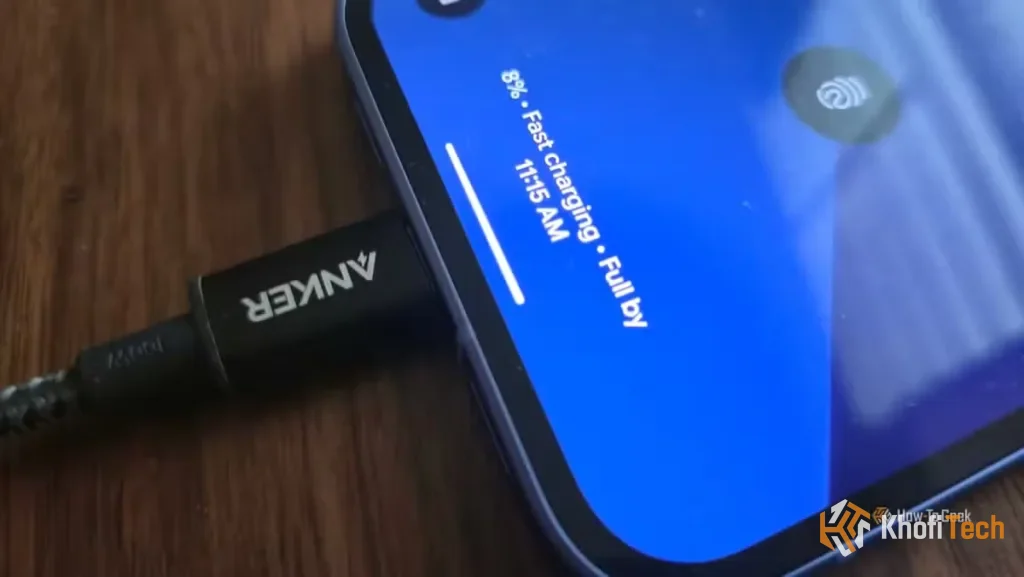
You plug an 80W or 100W SuperVOOC charger into a OnePlus or Oppo flagship, and the battery climbs from 0% to 50% in roughly ten minutes. But when you plug that exact same high-wattage power adapter into an iPhone, Google Pixel, or Samsung Galaxy, the charging animation crawls along at an agonizingly sluggish pace, taking well over two hours to complete.
How can a wall brick capable of delivering 100 watts struggle to charge a phone that only needs 27 watts? The answer lies in the fundamental battle between proprietary charging architecture and open industry standards.
Comparison: SuperVOOC vs. USB-PD vs. Samsung PPS
Here is how the dominant fast-charging standards compare across power delivery mechanics, heat management, and device compatibility:
1. How SuperVOOC Works: Low Voltage, High Amperage
SuperVOOC (developed by BBK Electronics and shared across Oppo, OnePlus, and Realme) was engineered to solve mobile gaming and thermal throttling. Lithium-ion batteries cannot absorb high voltages directly; a single-cell battery charges at roughly 4.2V to 4.4V.
Traditional fast chargers pump high voltage (e.g., 9V, 15V, or 20V) through the cable. The smartphone must then convert that high voltage down to 4.4V using internal DC-to-DC step-down converters. That voltage conversion inside the phone generates substantial heat, forcing the phone to throttle charging speed to protect the battery.
SuperVOOC completely changes this dynamic:
- Offloading the Heat: The voltage conversion hardware is moved out of the phone and into the large wall adapter.
- Dual-Cell Battery System: Flagship devices use two battery cells connected in series. A 100W SuperVOOC charger supplies approximately 11V at 9.1 Amps. The 11V is split evenly across both cells (~5V each) at huge current, filling both cells simultaneously without internal voltage step-down converters generating heat inside the chassis.
2. How USB-PD Works: High Voltage, Universal Stepping
USB Power Delivery (USB-PD) is an open standard established by the USB Implementers Forum (USB-IF). Unlike proprietary technologies, USB-PD was designed to power everything from wireless earbuds to 240W gaming laptops through one universal cable.
Because normal USB cables cannot safely carry massive 9A currents without thick, heavy copper wiring, USB-PD takes the opposite approach: keep amperage moderate (3A to 5A) and scale voltage up (5V, 9V, 15V, 20V, and 28V–48V on USB-PD 3.1).
3. The Protocol Handshake: Why Power Drops to 10W
When you plug any USB-C cable into a modern smartphone, electricity does not immediately rush in at full blast. First, a digital negotiation known as the handshake occurs between the power management IC inside the phone and the controller inside the brick.
Here is what happens when you connect an iPhone 15/16 to a 100W SuperVOOC charger:
- The Greeting: The iPhone sends a signal asking, “Do you support USB-PD 9V at 3A?”
- The Silence: The SuperVOOC brick contains proprietary firmware looking for a VOOC-authenticated microcontroller chip. It does not recognize the iPhone’s request and cannot provide the necessary 9V profile.
- The Safe Fallback: To prevent electrical fires or frying the device, the charger drops down to the lowest safe universal baseline: Standard 5V at 2A (10 Watts).
Your 100-watt power adapter has now effectively downgraded into a 2012-era wall plug. Even if the brick boasts massive numbers on its casing, it simply cannot deploy that power without the proprietary communication protocol.
4. Why Samsung Phones Refuse to Super Fast Charge
Samsung phones (such as the Galaxy S24, S25 series, and Galaxy Tab S12+) present an even stricter requirement. Samsung does not use standard fixed-voltage USB-PD for its 25W and 45W speeds; it mandates USB-PD 3.0 PPS (Programmable Power Supply).
PPS allows the device to request minute voltage changes in 20mV increments (for instance, dynamically demanding 9.4V, then 8.8V, then 7.2V as the battery heats up). Even if a third-party charger supports standard USB-PD up to 65W, if it lacks the specific 3.3V–11V at 4.05A / 5A PPS profile, the Galaxy will refuse to trigger “Super Fast Charging 2.0” and cap itself at basic 15W charging.
5. The One-Charger Fix: What to Buy in 2026
Carrying multiple proprietary chargers for your phone, laptop, and tablet defeats the entire promise of USB-C. To build a universal setup that fast-charges everything at full speed, look for the following specifications:
- Universal GaN Bricks with PPS: Purchase a multi-port Gallium Nitride (GaN) charger (such as the Anker Prime series or Ugreen Nexode) that explicitly lists PPS 5A support. This unlocks 45W on Samsung devices, 30W on iPhones, and up to 100W for laptops.
- Check for UFCS Support: If you use both a OnePlus/Realme and an iPhone, look for chargers certified with UFCS (Universal Fast Charging Specification). This open Chinese standard allows cross-compatibility up to 44W–66W on BBK devices without using proprietary bricks.
- Invest in 5A E-Marker Cables: Standard USB-C cables are physically limited to 3 Amps (capping power at 60W). To trigger Samsung 45W or higher laptop rates, ensure your Type-C cable is electronically marked for 100W / 240W (5A) current.
Frequently Asked Questions
Quick answers to common questions
No. Modern smartphones only draw the power they negotiate. When connected to a device that does not support SuperVOOC, the brick falls back to universally safe baseline USB profiles (typically 5V/2A at 10W, or basic 15W USB-PD on newer dual-standard adapters).
Because Apple devices charge strictly via the open USB-PD standard. Without compatible USB Power Delivery profile steps on the SuperVOOC adapter, the iPhone cannot pull its peak 27W–30W rate and charges at fallback speeds.
UFCS is a standardized charging protocol established by major hardware manufacturers to bridge the gap between proprietary fast charging (Oppo, Vivo, Xiaomi) and USB-PD, allowing cross-brand high-speed charging up to 40W–66W.
Yes. SuperVOOC requires high amperage (6A to 10A), which relies on thick copper internal wiring and custom detection pins inside the connector. Using a standard 3A USB-C cable will prevent SuperVOOC from triggering even if you use the original wall adapter.
Ask Khofi Tech
Related stories

Best Web Hosting Companies in Ghana (2026) – Top 5 Ranked
Compare the best web hosting companies in Ghana in 2026, including StormerHost, HostAfrica, and UltraHost. Check GHS pricing, MoMo support, and uptime

Why Phones and Laptops Cost More in 2027
Rising RAM and SSD costs from AI data centers are pushing up 2027 phone and laptop prices. See how the memory crunch affects specs and how to buy smart

Is Outlook Down? Live Status Check, Fixes & November 2026 Outage Explained
Can't load or send emails in Outlook? Check live Microsoft 365 status, read what caused the massive November 2026 global outage, and try 5 quick fixes.
Thread (0)