

Fast Charging Protocols Explained: USB-PD vs. PPS vs. SuperVOOC
Confused by charging speeds? Learn the exact differences between USB-PD, PPS, SuperVOOC, and QC, how Samsung and OnePlus negotiate power, and which power banks work.

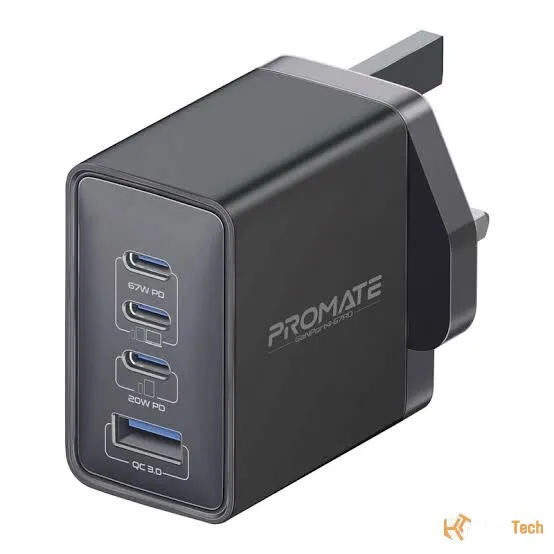
Plugging your phone into a high-wattage wall adapter does not guarantee maximum charging speed. A Samsung phone rated for 45W often draws only 15W to 25W from a 65W laptop charger, while an Oppo or OnePlus flagship rated for 80W drops down to 10W–18W on standard USB-C bricks.
Charging speed is dictated by a digital “handshake” between your device’s Power Management IC (PMIC) and the micro-controller inside the power supply. When protocols fail to match, power delivery drops back to baseline profiles to prevent component damage.
What Is the Difference Between a PD and a PPS Charger?
All PPS chargers support USB-PD, but standard USB-PD chargers do not necessarily support PPS.
A standard lithium-ion smartphone battery operates between 3.7V and 4.4V. When a fixed 9V USB-PD supply feeds into a phone, internal buck-converters must step that 9V down to roughly 4V. This conversion inefficiency bleeds off energy as heat directly inside your phone.
Programmable Power Supply (PPS) allows the phone to directly request the exact millivolts it needs in real-time (e.g., 4.05V, 4.10V). The voltage conversion occurs inside the wall adapter rather than the phone, reducing internal thermal load and preventing charging slowdowns.
Is SuperVOOC the Same as USB-PD?
No, SuperVOOC is fundamentally different from USB Power Delivery.
- USB-PD is an open, universal standard established by the USB Implementers Forum (USB-IF). It relies on high voltage and moderate current (e.g., 20V at 3A or 5A).
- SuperVOOC (developed by Oppo and shared across OnePlus and Realme as Warp/Dart charge) is a low-voltage, ultra-high-current proprietary architecture. Rather than sending 20V, SuperVOOC typically pushes 10V or 11V at 6A to 11A+ directly across two internal battery cells wired in series.
The SuperVOOC Handshake Trap
Plugging a 100W SuperVOOC phone into an ordinary 100W laptop charger causes the device to drop out of its proprietary high-amperage state. It reverts down to basic USB-PD or PPS, frequently capping speeds between 18W and 45W. Reaching full manufacturer speeds requires the official SuperVOOC power adapter and an authentic high-gauge cable equipped with the proprietary identifier pin.
Battery Longevity: Concerned about whether pushing 45W to 100W daily will damage your battery cells over time? Read our breakdown on Is Overnight Charging Bad for Your Battery in 2026?
Which Is Better: PD or QC (Quick Charge)?
In the early days of fast charging, Qualcomm’s Quick Charge (QC 2.0 / 3.0) and USB-PD were competing, incompatible systems. Today, USB-PD is the clear industry standard.
USB Power Delivery (PD)
- Standard: Universal USB Type-C industry baseline.
- Cross-Compatibility: Charges iPhones, Android flagships, iPads, laptops, and the Nintendo Switch.
- Scalability: Ranges from 18W up to 240W via USB-PD 3.1 Extended Power Range (EPR).
Qualcomm Quick Charge (QC)
- Status: Merged into open standards.
- QC 4.0 / QC 5: Fully compatible with USB-PD and PPS specifications.
- Legacy Hardware: Older QC 2.0/3.0 adapters relied on USB-A ports and do not negotiate proper high-speed delivery with modern USB-C laptops or tablets.
Verdict: Choose a USB-PD (PPS-enabled) charger. A modern USB-PD 3.0 PPS adapter automatically negotiates with Quick Charge 4/5 devices while powering your laptops and Apple devices safely.
SuperVOOC vs. Flash Charger vs. Generic Fast Chargers: Which Is Best?
“Flash Charge” is often used as a general marketing term by brands like Vivo and iQOO, or as casual shorthand for any high-speed charger. Comparing these setups comes down to convenience versus raw wattage:
- For Maximum Raw Speed (Single Device): A SuperVOOC / Flash Charger wins decisively if you use a compatible phone. Refilling a 5,000 mAh battery from 0% to 100% in ~25 minutes with minimal heat buildup inside the phone is only possible via these high-current systems.
- For Versatility and Real-World Travel: A USB-PD PPS Charger is the superior investment. Instead of carrying separate power bricks for your phone, work laptop, wireless headphones, and tablet, a single multi-port GaN USB-PD charger reliably fast-charges everything from one wall outlet.
Hardware Diagnostics: If your phone is stuck charging slowly or fluctuating between rates, troubleshoot your port, cable, and power source with our step-by-step guide: Why Is My Phone Charging Slowly? 5 Hardware Bottlenecks Solved.
Is a SuperVOOC Charger Good for Daily Use?
Yes, provided you understand its specific use case:
- 1. On Oppo, OnePlus, and Realme Phones: It is the fastest and coolest charging method available. The phone does not overheat because the bulk of voltage regulation happens inside the wall brick.
- 2. On iPhones, Pixels, and Laptops: Recent 80W, 100W, and 120W SuperVOOC adapters have begun incorporating standard USB-PD and PPS fallback protocols on their Type-C ports. However, they often cap PD output at 45W or 65W rather than their advertised 100W ceiling.
- 3. Battery Degradation: Despite pushing upwards of 80W to 100W, dual-cell configurations ensure each individual battery cell only receives roughly 40W to 50W, keeping battery degradation rates comparable to typical fast-charging standards over a standard 2-year lifecycle.
Which Power Bank Supports SuperVOOC?
Because SuperVOOC requires specialized charging controllers, the vast majority of standard retail power banks only output via standard USB-PD and Quick Charge. Connecting a OnePlus or Oppo device to an ordinary power bank typically limits speeds to 10W–18W.
If you need full SuperVOOC speeds on the move, these models feature direct support:
Shopping Tip: When buying a third-party power bank for a OnePlus or Oppo device, check the technical specifications printed on the packaging for explicit SuperVOOC compatibility or an output rated for 11V at 6A–7.3A. High overall wattage (such as a 100W PD-only power bank) will not deliver native SuperVOOC speeds.
Protocol Matrix: USB-PD vs. PPS vs. SuperVOOC vs. Samsung vs. QC
Frequently Asked Questions
Quick answers to common questions
Samsung reserves the Super Fast Charging 2.0 label for true 45W connections. If your screen displays standard Super Fast Charging (25W) while connected to a 45W or 65W charger, either your power adapter lacks PPS with a 4.5A/5A output range, or you are using a standard 3A cable instead of a certified 5A E-Marker cord.
No. An iPhone will not communicate using the proprietary SuperVOOC protocol. Instead, the adapter negotiates a standard 5V or baseline USB-PD handshake, delivering a safe 15W to 20W current without risking electrical damage.
Yes. Standard USB-C cables support a maximum of 3 Amps (up to 60W). Charging at 65W to 240W on laptops, hitting 45W on Samsung phones, or running SuperVOOC at peak speeds requires high-gauge cables equipped with an electronic marker (E-Marker) chip.
Ask Khofi Tech
Related stories

Best Web Hosting Companies in Ghana (2026) – Top 5 Ranked
Compare the best web hosting companies in Ghana in 2026, including StormerHost, HostAfrica, and UltraHost. Check GHS pricing, MoMo support, and uptime

Why Phones and Laptops Cost More in 2027
Rising RAM and SSD costs from AI data centers are pushing up 2027 phone and laptop prices. See how the memory crunch affects specs and how to buy smart

Is Outlook Down? Live Status Check, Fixes & November 2026 Outage Explained
Can't load or send emails in Outlook? Check live Microsoft 365 status, read what caused the massive November 2026 global outage, and try 5 quick fixes.
Thread (0)