

ChatGPT for Academic Research and Exam Prep (2026 Guide)
Learn how to ethically use ChatGPT for academic research and exam prep. Copy proven prompts for active recall, literature reviews, and mock exams.

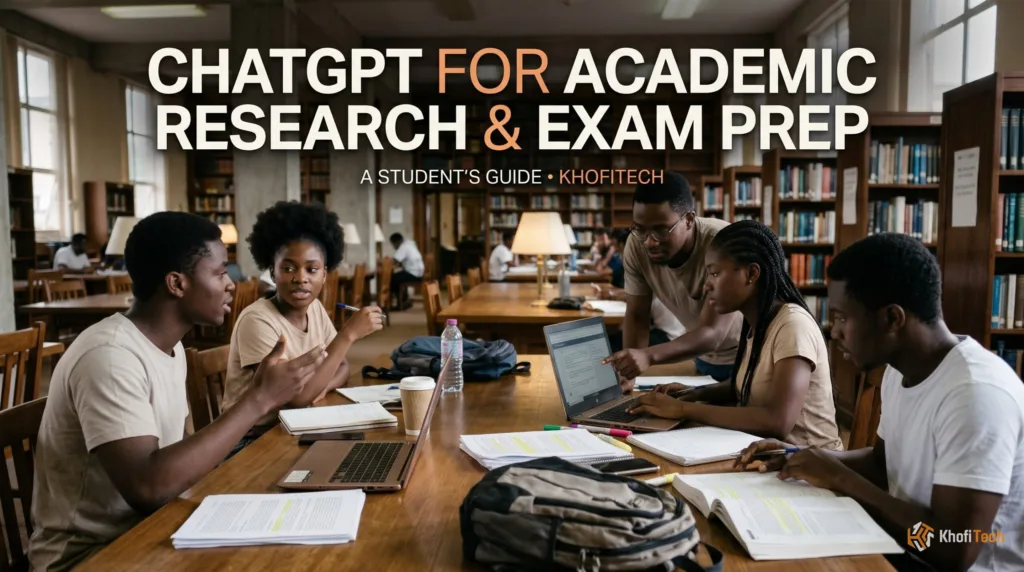
Learning how to properly use ChatGPT for academic research and exam revision allows university students to study smarter without triggering plagiarism penalties or relying on inaccurate shortcuts.
Most students treat generative AI like a search engine or ghostwriter. They ask it to write an essay from scratch, only to receive generic prose and hallucinated bibliographies. Using ChatGPT for academic research as an interactive Socratic tutor, argument stress-tester, and active-recall partner delivers far better grades while protecting your academic integrity.
Why Use ChatGPT for Academic Research Instead of Shortcuts?
The line between high-yield research assistance and academic misconduct comes down to ownership. AI should handle conceptual exploration and synthesis—not the writing of your final submission.
| Ethical Research & Study (Permitted) | Academic Misconduct (High Risk) |
|---|---|
| Brainstorming thesis angles, counter-arguments, and research gaps | Submitting AI-generated essays, dissertations, or code directly |
| Synthesizing real research abstracts pasted from primary databases | Inventing references using unverified, hallucinated AI citations |
| Simulating oral exams and running timed active-recall drills | Copying test answers directly into unproctored online quizzes |
| Explaining complex statistical formulas and difficult textbook proofs | Accepting raw mathematical calculations without manual checking |
How to Prompt ChatGPT for Academic Research
1. Identifying Research Gaps & Thesis Proposals
A common bottleneck in academic writing is developing a focused research question. Instead of asking for a general topic, ask the model to uncover methodological gaps:
2. Synthesizing Verified Literature
Because language models developed by OpenAI predict text statistically rather than searching live peer-reviewed catalogs, they frequently generate fake citations.
To conduct ChatGPT for academic research safely, search Google Scholar or JSTOR for real publications, then paste their abstracts into this prompt:
3. Stress-Testing Thesis Defenses
Before submitting a proposal or paper, ask the AI to play devil’s advocate:
Using ChatGPT for Exam Preparation & Active Recall
Passive reading gives a false sense of security. Preparing for demanding university exams requires active retrieval practice.
1. Interactive Socratic Mock Examiner
Simulate a live oral examination where the model tests your knowledge point-by-point:
2. Multi-Tier Conceptual Breakdown
When a textbook definition is difficult to digest, prompt the model to unpack it progressively:
Pro-Study Tip: Dealing with large PDF slide decks? Avoid dumping entire files into chat windows. Follow our guide on How to Use Google NotebookLM to Study Lecture Notes to query verified slide content directly.
Frequently Asked Questions
Quick answers to common questions
Yes. Turnitin and other academic proctoring tools detect statistical syntax patterns, unnatural transitional words, and unverified citations typical of AI generation. Use AI for study structuring, but draft your own papers.
Generative language models do not query static library archives; they calculate the most probable subsequent word tokens. When asked for citations, they often combine real authors and believable journal names into completely fictitious papers.
Yes. The free version powered by GPT-4o provides more than enough capability for active recall drilling, thesis outlining, and conceptual explanations.
Planning your academic path? Check out our analysis of Top In-Demand Careers & University Programs to align your studies with industry hiring trends
Ask Khofi Tech
Related stories

How to Get Canva for Education for Free
Learn how to get free access to Canva for Education. We break down teacher verification rules, student access workflows, Pro feature comparisons, and safety tips.
Is Claude Better Than ChatGPT in 2026?
Is Claude better than ChatGPT in 2026? We benchmark Claude 3.5 Sonnet against GPT-4o across coding, natural writing, reasoning, and pricing.
10 Best Apps for Content Creators in 2026 (Free & Paid)
Discover the 10 best apps for content creators in 2026. From free video editing on CapCut and Canva to mobile monetization and scripting on Android & iOS
Thread (0)